
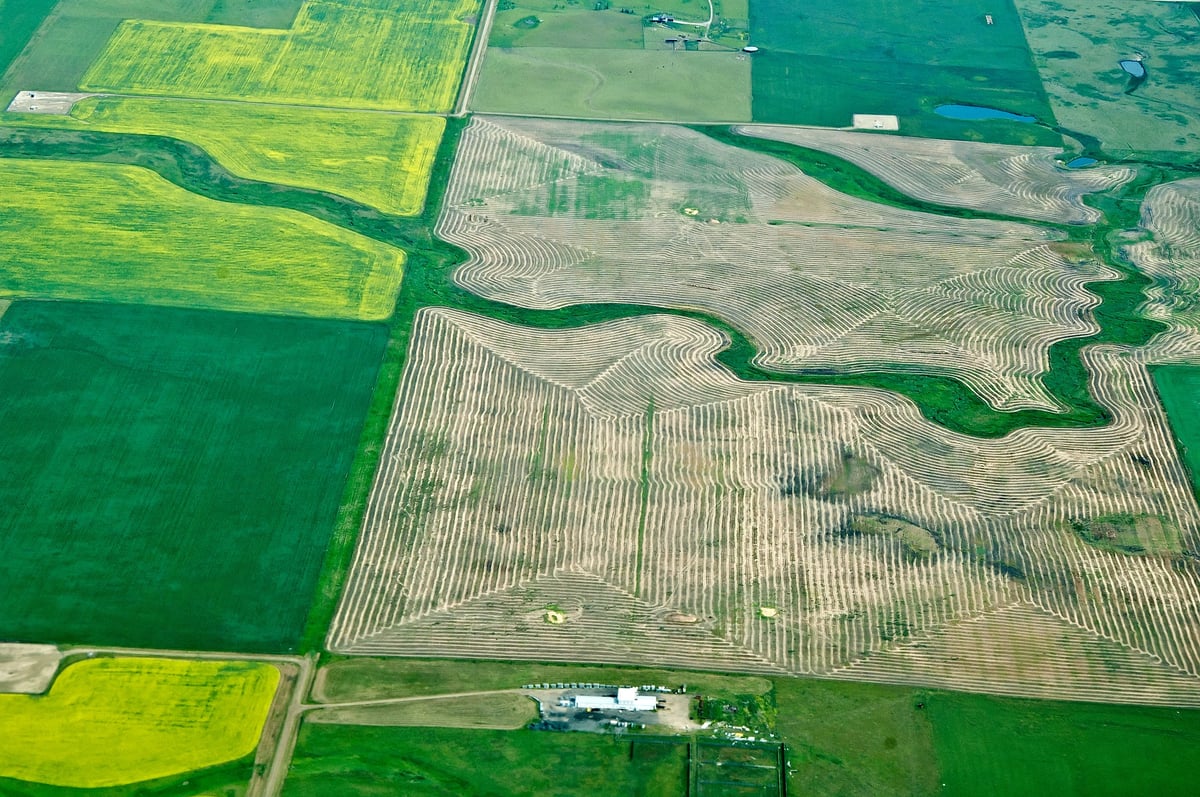
The North Carolina Inherited Land Guide
A Practical Roadmap for Heirs, Families, Executors, and Out-of-State Owners
Table of Contents
Executive Summary
A step-by-step guide for anyone who has inherited land in North Carolina. Covers first actions after learning about inherited property, identifying legal owners, navigating probate and estate administration, handling multiple heirs and family disagreements, understanding heirs' property law, finding deeds and tax records, addressing mortgages and liens, and evaluating whether to keep, sell, divide, or donate the property. Includes a family decision-meeting worksheet and document checklist.
What You'll Learn
- •Know the first actions to take after learning you've inherited land
- •Understand how probate and estate administration affect the property
- •Navigate situations with multiple heirs or family disagreements
- •Find and organize deeds, parcel numbers, tax records, and title documents
- •Evaluate the options: keep, sell, divide, buy out other heirs, or donate
You Are Not Alone
If you have inherited vacant land in North Carolina — whether you asked for it or not — you are in a situation millions of Americans face each year. A parent, grandparent, aunt, uncle, or distant relative passes away, and among the assets they leave behind is a parcel of land. Sometimes you knew about it. Sometimes you didn't. Sometimes it's a 50-acre farm that's been in the family for generations. Sometimes it's a quarter-acre lot in a subdivision that never got built.
Whatever the circumstances, inherited land creates a set of practical and emotional challenges that go well beyond what most people expect:
- You may not know where the deed is — or even the exact location of the property.
- Probate may or may not have been completed. If it hasn't, you don't legally own the land yet, even though it "feels" like yours.
- Multiple family members may share ownership — siblings, cousins, step-relatives — and they may not agree on what to do.
- Property taxes may be unpaid, sometimes for years.
- The title may have defects from prior generations — old deeds, missing signatures, open estates — that make the property difficult to sell.
- You may be paying taxes on land you've never seen, in a county you've never visited.
- You may feel guilty about selling "family land" even though it's costing you money and creating stress.
This guide is written for you. It covers what you need to know as a North Carolina resident (or out-of-state heir who inherited North Carolina land), step by step, in plain language. We'll explain how inherited land ownership works, the most common complications, and your practical options — including paths that don't require family consensus. Our goal is to help you make a clear-eyed decision, whether or not U.S. Land Company is part of the outcome.
First Things First — What You Need to Locate
Before making any decisions, gather as many of these documents as you can:
- The deed. This is the legal document that transferred the property to the person you inherited from. It may be in a safe deposit box, a file cabinet, or recorded at the county Register of Deeds. If you don't have a copy, you can obtain one from the Register of Deeds in the county where the land is located.
- The parcel number (PIN). Every parcel has a unique identifier used by the county tax office. You can usually find this on a tax bill, or by searching the county GIS website.
- The most recent tax bill. This tells you the annual property tax amount, whether taxes are current, and the parcel's assessed value. Note: assessed value is for taxation purposes and may not reflect actual market value.
- The death certificate of the person you inherited from. You'll need this for probate, title transfer, and tax purposes.
- The will (if one exists). The will may specify who inherits the land and under what conditions.
- Probate documents. If probate has been opened, locate the case file, the personal representative's letters, and any inventories or accountings filed with the court.
- Any existing survey. A survey shows the property boundaries, easements, and encroachments. Not all properties have one, but if it exists, it's valuable.
- Title insurance policy (if one was issued when the deceased acquired the property).
If you have none of these documents, start with the county Register of Deeds and the county tax office — both usually have online search tools.
Understanding What You Actually Own
Inherited land ownership is not always what it seems. Here are the key concepts:
Sole ownership vs. co-ownership. If the deceased was the sole owner and you are the sole heir, ownership is straightforward — once probate is complete, you own the property outright. But if the deceased owned the property jointly with a spouse, or if multiple heirs inherited, ownership is shared. More on that below.
Tenancy in common. When multiple people inherit land together in North Carolina, they typically own it as "tenants in common." This means each person owns an undivided fractional interest in the whole property. If four siblings each inherit a quarter interest, none of them owns a specific quarter of the land — each owns a quarter interest in the entire parcel. Each co-owner has the right to use the whole property (subject to not excluding other co-owners), and each can sell, mortgage, or transfer their fractional interest independently.
Life estates. Sometimes a will grants one person the right to use the property during their lifetime (a "life tenant"), with the property passing to a different person (the "remainderman") after the life tenant dies. If you are the remainderman, you do not have full ownership rights until the life tenant passes away.
Undivided interest. If you inherited a fractional share — say, a one-sixth interest alongside five cousins — you own that interest, but you do not control the entire property. You cannot sell the whole property without the other owners' consent. You can, however, sell your fractional interest to someone else — including a land buyer who is willing to purchase a partial interest.
An Overview of North Carolina Probate
Probate is the legal process by which a deceased person's assets are transferred to their heirs or beneficiaries. In North Carolina, probate is handled by the Clerk of Superior Court in the county where the deceased lived at the time of death — not the county where the land is located (unless they're the same).
Key terms to understand:
- Testate vs. intestate. "Testate" means the person died with a valid will. "Intestate" means they died without a will, and North Carolina's intestacy laws determine who inherits.
- Personal representative (executor/administrator). The person appointed by the court to manage the estate — collecting assets, paying debts, and distributing what remains to heirs. Called an "executor" when there's a will, an "administrator" when there isn't.
- Letters testamentary / Letters of administration. The court document that gives the personal representative legal authority to act on behalf of the estate.
- Probate estate vs. non-probate assets. Some assets pass outside probate — jointly-owned property with right of survivorship, assets with named beneficiaries (life insurance, retirement accounts), and assets held in a trust. Land held solely in the deceased's name typically must go through probate.
- Year's allowance. North Carolina law provides a statutory allowance for the surviving spouse and minor children, which takes priority over other claims against the estate.
When Probate Has Already Been Completed
If probate has been closed and the personal representative has distributed the property to the heirs — either by executing a new deed or by the passage of time under the will — you (and any co-heirs) own the property. The personal representative's job is done.
In this situation, your focus is on managing the property as an owner: paying taxes, making decisions with co-owners, and choosing among the options described later in this guide.
You should verify that the deed reflecting the inheritance has been recorded at the county Register of Deeds. If it hasn't, the public record still shows the deceased as the owner, which will cause problems when you try to sell, mortgage, or transfer the property.
When Probate Has Not Been Started
If the person who owned the land died and no probate proceeding has been opened, the land is still legally owned by the deceased's estate. You cannot sell it, borrow against it, or transfer clear title until probate is completed or an alternative legal process resolves the ownership.
Steps to take:
- Locate the will (if one exists) and file it with the Clerk of Superior Court in the county where the deceased lived. North Carolina law requires anyone in possession of a will to file it with the court within a reasonable time after the death.
- Determine who should serve as personal representative. If there's a will, it usually names an executor. If not, the court will appoint an administrator — typically a surviving spouse or adult child.
- Open the estate. The personal representative files the necessary forms with the Clerk of Court and pays the filing fee. Once appointed, they receive Letters Testamentary or Letters of Administration, which allow them to act on behalf of the estate.
- Inventory the assets. The personal representative identifies all estate assets, including the land, and reports them to the court.
- Pay debts and taxes. The estate must satisfy valid creditor claims and file any required tax returns before distributing assets to heirs.
- Distribute the property. Once debts and taxes are paid, the personal representative transfers the land to the heirs according to the will (or intestacy law) by executing and recording a new deed.
Note on small estates: North Carolina has simplified procedures for small estates (generally, estates with personal property under $20,000, or $30,000 if the surviving spouse inherits everything). However, real estate — including vacant land — is not eligible for small-estate administration through an affidavit of collection. Land generally requires full probate or, in limited circumstances, a determination of descent proceeding.
Multiple Heirs — The Most Common Complication
The single most common complication with inherited land is multiple heirs who disagree — about whether to sell, at what price, to whom, or who should manage the property in the meantime.
When several people each own a fractional interest:
- No single heir controls the property. Selling the entire property requires all co-owners to agree and sign the deed. One holdout can block a sale indefinitely.
- Each co-owner is responsible for taxes. If some heirs pay and others don't, the paying heirs are effectively subsidizing the non-paying ones — and the property may still face tax foreclosure if taxes go unpaid.
- Any co-owner can sell their individual interest. You can sell your fractional share to a buyer willing to purchase it — including a land acquisition company. The buyer steps into your shoes, owning your fractional interest alongside the other co-owners.
- Communication is the bottleneck. In many families, the land sits in limbo not because of active disagreement, but because no one wants to initiate the conversation. One person taking the lead to contact co-heirs, share information, and propose options can break the logjam.
Practical advice: If you are one of several heirs, start by gathering information — the parcel number, tax status, acreage, access, and approximate value. Share this with the other heirs along with a clear statement of your goals. Many family land disputes resolve once everyone sees the same facts.
Heirs' Property and the Uniform Partition Act
"Heirs' property" is a legal term for land that passed to multiple family members through inheritance — typically without a will — where the ownership has become fragmented across generations. It is common in rural North Carolina, particularly in communities where formal estate planning was not practiced.
Heirs' property is vulnerable to a legal action called partition. Any co-owner can petition the court to divide or sell the property. Under North Carolina's Uniform Partition of Heirs Property Act (enacted in 2020, codified at N.C. Gen. Stat. Chapter 46A), the process includes additional protections for family landowners:
- The court must determine the property's fair market value.
- If the property is "heirs property," non-petitioning co-owners have a right of first refusal — they can buy out the petitioning co-owner at the appraised value.
- If the court orders a sale, it must be an open-market sale supervised by a real estate broker (unless all parties agree otherwise), not a courthouse-steps auction.
- The court must consider non-economic factors, including the property's heritage value, the consequences of displacing family members who live on the property, and whether partition in kind (physically dividing the land) is feasible.
The Uniform Partition Act is an important reform, but partition remains a court process — meaning it takes time and money (attorney fees, appraisal costs, commissioner fees). It is usually a last resort, not a first move.
Title Issues Common to Inherited Land
Inherited land often comes with title defects that were never resolved by the prior owner. Common issues include:
- Missing heirs in the chain of title. If a prior owner died and their estate was never probated, or if an heir was omitted from a prior deed, the title may be clouded. This can go back multiple generations.
- Improperly executed deeds. Old deeds may lack proper notarization, legal descriptions, or signatures from all required parties (including spouses).
- Unreleased deeds of trust. A mortgage or deed of trust may have been paid off but never formally cancelled in the public record.
- Boundary disputes. Without a survey, it may be unclear where your land ends and the neighbor's begins — and whether the fence line matches the deed line.
- Easements not in the public record. A neighbor may have used a road across the property for decades without a recorded easement, potentially creating a prescriptive easement claim.
- Tax lien certificates. If property taxes went unpaid, an investor may have purchased a tax lien certificate at the county tax sale, giving them a claim on the property.
Title issues don't necessarily mean you can't sell the property. Many title defects can be resolved — through quiet title actions, affidavits of heirship, release deeds, or other legal remedies. But they take time and legal work, and the process is not free. A land buyer who purchases inherited properties regularly will be familiar with these issues and can often handle them as part of the acquisition process.
Tax Obligations on Inherited Land
Inherited land carries ongoing tax obligations:
Property taxes. You are responsible for property taxes from the date you become the owner. If back taxes are owed from before the death, the estate should pay them. If the estate has no funds, the heirs may need to pay to prevent a tax foreclosure. North Carolina counties hold annual tax sales for delinquent properties, and losing land to a tax sale is almost always the worst financial outcome.
Income tax on sale (capital gains). When you sell inherited land, you may owe federal and state capital gains tax on the profit. However, inherited property receives a "stepped-up basis" — meaning your cost basis is the property's fair market value on the date of the previous owner's death, not what they paid for it. This stepped-up basis can significantly reduce the taxable gain when you sell.
No North Carolina inheritance tax. North Carolina does not have a state inheritance tax or estate tax. The federal estate tax applies only to very large estates (over $13.99 million per individual in 2026). For most families, estate tax is not a concern.
Important: Seek advice from a CPA or tax professional before selling inherited land. The tax treatment depends on your specific circumstances, including how long you've held the property, whether you've made improvements, and your overall tax situation.
The Cost of Doing Nothing
For many heirs, the default is inaction — it's emotionally easier than making a decision that might upset family members or feel disloyal to the person who left the land. But inaction has real costs:
- Annual property taxes you continue to pay for land that produces no income.
- Growing tax delinquency if no one is paying, eventually leading to a tax foreclosure sale — where the property sells for a fraction of its value.
- Deterioration of the property — overgrowth, illegal dumping, encroachments, and code violations that reduce value and create liability.
- Fractured ownership across another generation — when you pass away, your fractional interest is divided among your own heirs, and the ownership becomes even more complex.
- Missed opportunity — capital tied up in land that could be deployed elsewhere, whether to pay off debt, fund education, invest, or cover living expenses.
Doing nothing is a decision — and often the most expensive one.
Your Options for Inherited Land
You have more options than you may think. Here are the main paths:
Selling to a Direct Land Buyer
If you want to convert inherited land into cash with minimal complexity — particularly when co-heirs are scattered, unresponsive, or disagreeing — a direct sale to a land acquisition company may be the fastest path.
What happens: You provide information about the property. The buyer researches it, evaluates the title situation, and presents an offer. If you accept, the buyer coordinates with a real estate attorney to close the transaction. If other heirs need to sign, the buyer's team can help manage that communication.
What about fractional interests? Many land buyers will purchase a fractional interest — your individual share of the property — even if other co-owners don't want to sell. You receive cash for your interest, and the buyer steps into your ownership position alongside the remaining co-owners. This allows you to exit an inherited property situation without requiring consensus from every family member.
Key advantage for heirs: Land acquisition companies that buy inherited properties are familiar with the common complications — probate delays, title defects, multiple heirs, delinquent taxes — and are structured to handle them. This reduces the burden on you to solve every problem before selling.
Selling Your Interest to Another Heir
If one co-heir wants to keep the property and the others want to sell, the simplest resolution is often for the keeping heir to buy out the others. This keeps the land in the family and avoids a partition action.
The challenge is valuation. Without an appraisal, heirs may disagree on what the property is worth. An independent appraisal — or a purchase offer from a third party — can establish a benchmark price that all heirs can use as a reference point for the buyout.
Sale When All Heirs Agree
If all heirs agree to sell, the process is relatively straightforward: execute a sale contract, all owners sign the deed at closing, and proceeds are distributed according to each heir's ownership percentage. Agreement among heirs makes the property more marketable to any type of buyer — direct buyer, open-market listing, or auction.
Partition Sale — When Heirs Cannot Agree
When co-owners cannot reach agreement, any co-owner may file a partition action in Superior Court. As described above, the Uniform Partition of Heirs Property Act provides certain protections. The court can order either:
- Partition in kind: Physically dividing the land among co-owners — feasible only if the property is large enough and the division is equitable.
- Partition by sale: Selling the entire property and dividing the proceeds among co-owners — the more common outcome for smaller parcels or property that cannot be divided equitably.
Partition is a legal process. It requires an attorney, takes months to resolve, and the costs — attorney fees, court costs, commissioner fees, and in some cases a real estate broker's commission — are paid from the sale proceeds before distribution to the owners.
Holding the Property With Co-Heirs
If all co-heirs agree to keep the property, you should formalize the arrangement. At minimum:
- Agree on tax payments. Who pays? In what proportion? What happens if someone doesn't pay?
- Agree on use. Can one co-owner use the land (hunting, camping, farming) while others don't? Who is responsible for maintenance?
- Agree on decision-making. How will you decide whether to sell, lease, or improve the property in the future? Unanimous consent? Majority vote?
- Put it in writing. A co-ownership agreement, drafted by an attorney, can prevent disputes later. Without one, North Carolina's default rules of tenancy in common govern — and those rules can produce results no one intended.
When You Need Professional Help
Inherited land can involve the intersection of probate law, property law, tax law, and title law — and sometimes family dynamics that make all of those harder. You should consult:
- A North Carolina probate attorney — to open an estate, handle probate administration, or advise on probate alternatives.
- A North Carolina real estate attorney — for title issues, partition actions, deeds, and closing.
- A CPA or tax professional — for capital gains, stepped-up basis, gift tax, and estate tax questions.
- A certified appraiser — for a formal valuation (needed for estate tax returns, charitable donations, partition actions, and sometimes for buyout negotiations).
- A mediator — when family disagreement is the main obstacle and the parties are willing to work toward resolution without litigation.
Inherited Land Decision Checklist
Inherited Land Decision Checklist
Document Gathering
- □ Locate the deed
- □ Obtain the parcel number (PIN)
- □ Get the most recent tax bill
- □ Locate the will (if any)
- □ Get certified copies of the death certificate
- □ Find any existing survey
- □ Check for probate case file at the Clerk of Court
Probate Status
- □ Is probate completed? □ Yes □ No □ Unknown
- □ If not, has a probate case been opened? □ Yes □ No
- □ Has the deed been updated to reflect the inheritance? □ Yes □ No
Ownership
- Number of heirs/co-owners: ______
- □ Have all co-owners been identified and contacted?
- □ Is there agreement among co-owners about what to do?
- □ Is there a life estate or other encumbrance on the property?
Financial
- Annual property taxes: $______
- □ Are taxes current? □ Yes □ No (amount delinquent: $______)
- □ Are there any mortgages, liens, or judgments against the property?
- □ Estimated fair market value (if known): $______
Property Condition
- □ Have I visited the property?
- □ Road access: □ Paved □ Gravel/Dirt □ None
- □ Any known environmental issues?
- □ Any known encroachments or boundary disputes?
My Preferred Outcome
- □ Sell my interest (even if other heirs keep theirs)
- □ Sell the entire property (all heirs agree)
- □ Keep the property jointly with co-heirs
- □ Buy out other heirs and keep the property myself
- □ Not sure — need more information
U.S. Land Company provides free, no-obligation property reviews for inherited land in North Carolina — including fractional interests where other heirs are not ready to sell. Request your inherited property review here or call us at (984) 367-5656. We understand inherited land and the complexities that come with it.
Sources and Further Reading
- North Carolina General Statutes, Chapter 28A (Probate and Administration of Decedents' Estates) — ncleg.gov
- North Carolina General Statutes, Chapter 46A (Uniform Partition of Heirs Property Act) — ncleg.gov
- North Carolina General Statutes, Chapter 29 (Intestate Succession) — ncleg.gov
- North Carolina Administrative Office of the Courts — Estates Procedures — nccourts.gov
- North Carolina Bar Association — Real Property Section — ncbar.org
- IRS Publication 551 (Basis of Assets) — irs.gov
- USDA — Heirs' Property Relending Program and Land Access resources — farmers.gov
Sources accessed July 2026. Laws, regulations, and court procedures change. Verify current information with a qualified professional before making decisions.
Educational Purpose
This report is published by U.S. Land Company, A Division of Acquire, Inc., for general informational and educational purposes only. It does not constitute professional advice of any kind. Every property and situation is unique. You should consult qualified licensed professionals regarding your specific circumstances before making any decision about your land.
Probate and Estate Matters
Discussions of inherited property, probate, estates, estate planning, heirs' property, and related matters are educational only. Probate and estate administration are governed by North Carolina law and may involve complex legal, tax, and family considerations. Always consult a qualified North Carolina estate attorney and, where appropriate, a CPA or tax professional for guidance on inherited land.
No Legal Advice
Nothing in this report constitutes legal advice. U.S. Land Company is not a law firm and does not provide legal services. Legal questions involving property ownership, title, probate, partition, contracts, or any other legal matter should be directed to a qualified North Carolina attorney licensed to practice in the relevant jurisdiction.
No Tax Advice
Nothing in this report constitutes tax advice. Tax implications of selling, holding, donating, financing, or transferring land can be significant and vary by individual circumstances. Consult a qualified CPA, enrolled agent, or tax attorney before making decisions with tax consequences.
Valuation Disclosure
Any discussion of land value in this report is for educational purposes only. U.S. Land Company does not provide appraisals, and nothing in this report should be construed as a formal valuation, a guaranteed offer price, or a commitment to purchase any property. Land values depend on numerous factors and can only be determined through professional appraisal, comparable-sale analysis, and market exposure.
Published: July 30, 2026 • Next Review: January 2027 • Published by U.S. Land Company, A Division of Acquire, Inc.
Ready to Take the Next Step?
Tell us about your property. We'll research it and let you know whether we can make an offer — with no obligation.